

What to Expect During Smoke & Soot Cleanup: Process, Odor Treatment, and Follow-Up

Direct Answer
During smoke and soot cleanup, expect a residue assessment first, then surface cleaning matched to the soot type, HVAC duct cleaning, and molecular odor neutralization (thermal fogging, hydroxyl, or ozone). The process typically takes a few days to over a week depending on soot extent and HVAC contamination. You should not attempt to clean soot yourself, should not run the HVAC until the ducts are cleaned, and should not paint or seal surfaces until odor treatment is complete. After cleanup, the property is clean, deodorized, and ready for reconstruction. 911 Mitigation Inc. guides South Florida property owners through each step.
Table of Contents
Residue Assessment and Soot Typing
The first step in smoke and soot cleanup is assessing the residue to determine the soot type and the extent of contamination. The crew inspects the affected areas, tests the soot to determine whether it is dry (wood/paper), wet/greasy (synthetic/protein), or fuel-oil residue, and maps the areas where smoke has traveled — including through the HVAC distribution system if the system was running during the fire. This assessment drives the cleaning methodology for each surface and determines the scope of the odor-neutralization phase.
The assessment also identifies which materials can be cleaned and which must be replaced. Hard, non-porous surfaces (metal, glass, sealed stone) are generally cleanable. Semi-porous surfaces (painted drywall, sealed wood) can often be cleaned and sealed. Highly porous materials (unsealed wood, certain fabrics, contaminated insulation) that have absorbed odor too deeply may require replacement. This determination is documented for your insurance claim and communicated before any removal begins.
Surface Cleaning by Soot Type
Once the soot type is identified, cleaning proceeds in the correct order for that type. For dry soot, dry chemical sponges and HEPA vacuuming remove the loose residue before any wet cleaning is attempted — applying water to dry soot smears it into the surface. For greasy or protein soot, professional-grade degreasers and alkaline cleaners break the bond between the soot and the surface. Hard, non-porous surfaces (metal, glass, sealed stone) are generally cleanable; porous surfaces may require sealing or, if too deeply contaminated, replacement.
Throughout, the crew uses HEPA-filtered equipment and personal protective equipment to avoid re-suspending the fine particles into the air. Cleaning proceeds from the least contaminated areas outward, or from ceilings down, to avoid recontaminating cleaned surfaces. The crew works methodically, section by section, and verifies each area before moving to the next. This is why professional smoke cleaning takes several days — it is a careful, methodical process, not a quick wipe-down.
HVAC Duct Cleaning
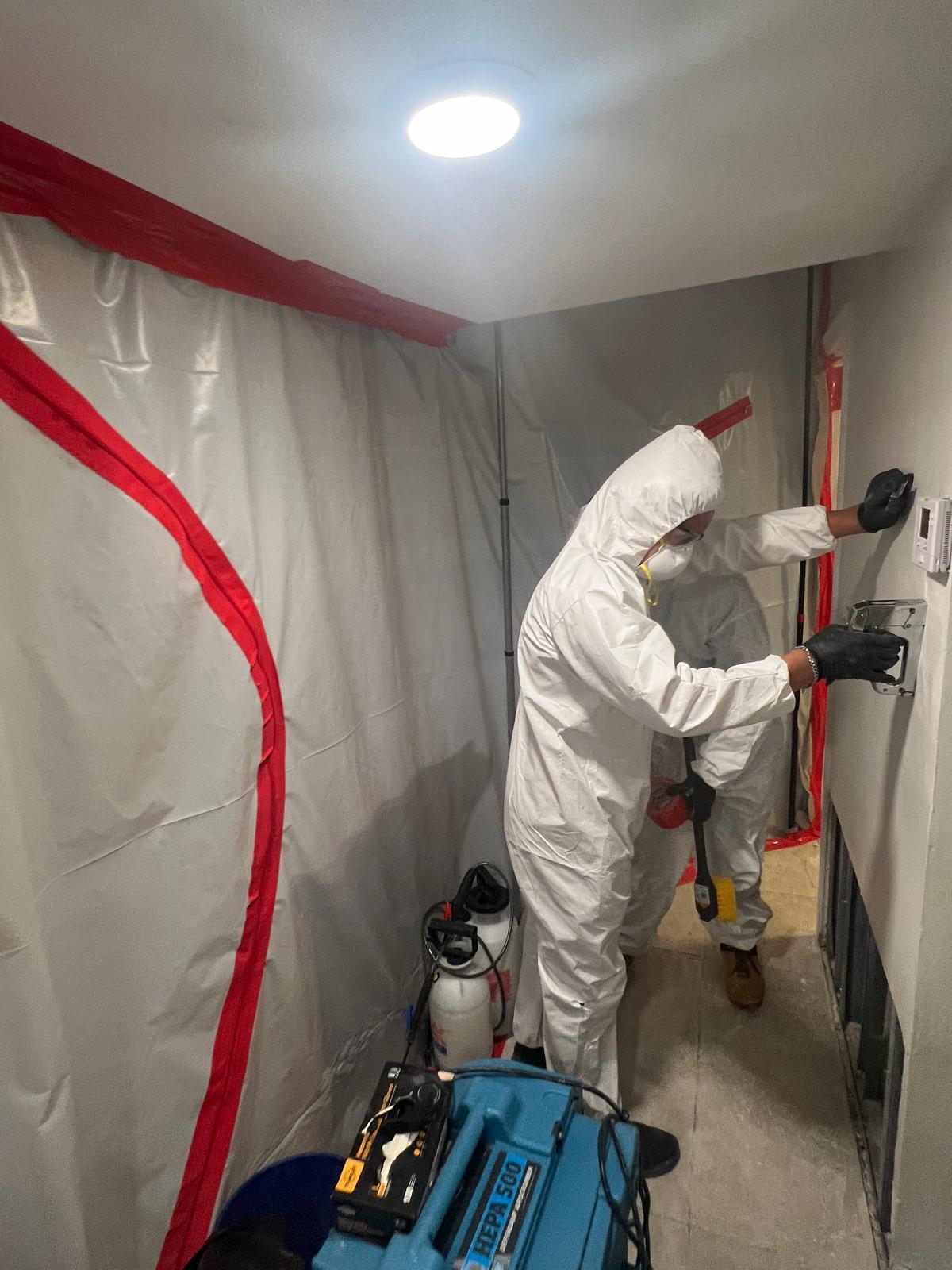
Because smoke particles travel through the HVAC system and settle inside the ductwork, cleaning the distribution system is an essential part of comprehensive smoke cleanup. If the ducts are not cleaned, soot re-circulates each time the system runs, redepositing on freshly cleaned surfaces and perpetuating the odor throughout the property. The system should not be operated until the ducts have been inspected and cleaned.
In cases of heavy contamination or where firefighting water introduced moisture, the damp environment inside ductwork can also support mold, so duct cleaning may pair with our broader water damage restoration scope. The HVAC cleaning process involves accessing the ductwork at multiple points, using agitation tools to dislodge soot, and HEPA vacuuming to remove it — combined with antimicrobial treatment when moisture contamination is present.
Odor Neutralization Methods
Surface cleaning removes the source of much of the odor, but embedded odor molecules in porous materials require molecular treatment. The primary methods:
- Thermal fogging recreates the heat and pressure of the fire to push deodorizing chemicals deep into the same pores the smoke penetrated.
- Hydroxyl generators use UV light to create hydroxyl radicals that safely break down odors and VOCs in the air and on surfaces — safe for use in occupied spaces.
- Ozone treatment chemically alters and eliminates severe odor molecules but is used only in completely unoccupied properties because high ozone levels are unsafe for humans, pets, and plants.
We do not guarantee complete odor elimination in every circumstance, especially when heavily charred structural materials cannot be removed. Some highly porous items — certain fabrics, unsealed wood, contaminated insulation — absorb odor too deeply to be salvaged and require replacement. Surfaces that still hold odor after treatment are sealed with an odor-blocking primer before any new finish is applied.
What to Avoid During Cleanup

Several common actions can make smoke damage worse or interfere with the cleanup process:
- Do not attempt to clean soot yourself. Standard cleaners and wet sponges smear soot deeper into surfaces, making professional cleaning harder or impossible.
- Do not run the HVAC system until the ducts have been inspected and cleaned. Running it re-circulates soot throughout the property.
- Do not paint or seal surfaces until odor treatment is complete. Painting traps odor behind the finish, where it will bleed through.
- Do not use ozone generators yourself. High ozone levels are unsafe for humans, pets, and plants. Ozone should only be used by professionals in unoccupied spaces.
- Do not discard items before documentation. Even heavily damaged items may need to be shown to your insurance adjuster.
Following these guidelines protects both your health and your insurance claim. Soot contains fine particulates and chemical residues that can affect respiratory health, and disturbing it without proper protective equipment re-suspends the particles into the air. Professional crews use HEPA-filtered equipment and containment protocols to capture particles at the source.
After Cleanup: What Comes Next

After smoke and soot cleanup is complete, the property is clean, deodorized, and ready for the reconstruction phase of full fire and smoke damage restoration:
- Structural drying is completed if firefighting water was present — see dehumidification and structural drying.
- Reconstruction replaces drywall, insulation, flooring, paint, and finishes to pre-loss condition.
- Content restoration completes any pack-out and specialized cleaning of salvageable belongings.
- Final inspection verifies the property is clean, dry, odor-free, and fully restored.
Throughout, 911 Mitigation Inc. serves as your single point of contact so the phases connect without gaps. If the loss also involved firefighting water, the drywall restoration and drying scope is coordinated alongside the smoke cleanup. The documentation from the smoke cleaning phase — soot type, surfaces cleaned, methods used, odor treatment applied — carries forward to the reconstruction crew so they know exactly what to expect, and any surfaces that still hold residual odor are flagged for sealing with an odor-blocking primer before new finishes are applied so the smell does not bleed through the reconstruction.
Frequently Asked Questions
How long does smoke and soot cleanup take?
It depends on the extent of soot and odor and whether the HVAC system is contaminated. A typical smoke cleanup ranges from a few days to over a week for severe contamination.
Can I stay in my home during smoke cleanup?
For minor contamination, sometimes. For ozone treatment or heavy soot, the property should be unoccupied. We advise based on the methods and scope required for your loss.
Should I run my HVAC during cleanup?
No, not until the ductwork has been inspected and cleaned. Running the system before cleaning re-circulates soot throughout the property.
Why does the smell persist after the fire was small?
Smoke particles are microscopic and travel through the HVAC into carpets, curtains, and ductwork throughout the home. A small kitchen fire can contaminate the whole house, requiring professional odor neutralization.
Will the odor come back after reconstruction?
If odor is fully neutralized before reconstruction and any remaining odor sources are sealed, it should not return. Skipping odor treatment is the most common cause of recurring odor.
Do I need separate companies for cleanup and restoration?
No. 911 Mitigation Inc. coordinates both phases so the sequence connects properly and you have one point of contact.
What documentation do you provide for my insurance?
We document the soot type, surfaces cleaned, methods used, odor treatment applied, and conditions found — supporting your claim and the reconstruction scope.
Preparing for Smoke & Soot Cleanup?
Call 786-334-4981 — we walk you through what to expect, what to avoid, and the full sequence from smoke cleanup to restoration.