

What to Expect During Fire Damage Cleanup: Preparation, Process, and Follow-Up

Direct Answer
During fire damage cleanup, expect a safety assessment first, then emergency board-up and tarping, followed by debris removal, tear-out of unsalvageable materials, and water extraction with drying. The process typically takes a few days to a week depending on the size of the loss. You should prepare by securing your insurance contact, avoiding the damaged area until it is cleared, and not discarding any items before they are documented. After cleanup, the property will be stabilized and ready for smoke cleaning and reconstruction. 911 Mitigation Inc. guides South Florida property owners through each step.
Table of Contents
What to Do Before Cleanup Begins
Before the cleanup crew arrives, there are several steps that protect both your safety and your insurance claim:
- Do not re-enter the property until the fire department or a qualified professional has cleared it for safe entry.
- Contact your insurance company to open a claim and ask what documentation they require.
- Do not discard any items before they are photographed and documented — even damaged items may need to be shown to your adjuster.
- Do not turn on utilities in a fire- or water-damaged structure until they have been inspected by a licensed professional.
- Photograph the damage if it is safe to do so, from a distance and without entering unstable areas.
- Secure valuables and documents that are accessible and safe to remove, if you are permitted to enter.
- Request your insurance adjuster's contact information so the cleanup crew can coordinate documentation directly.
These steps matter because they protect your claim and your safety. Insurance companies require policyholders to mitigate further damage — and that includes not discarding evidence of the loss before it is documented. Discarding a charred item before photographing it can lead to the insurer refusing to include it in the claim. Similarly, re-entering a fire-damaged structure before clearance is one of the most dangerous actions a property owner can take, because structural damage and residual hazards may not be visible.
Day One: Safety and Stabilization
On the first visit, the crew's priority is safety and stabilization. They will assess the structure for hazards, including structural instability, electrical risks, and residual heat. If windows were broken or the roof was damaged, they will perform emergency board-up and tarping to secure the property against weather and unauthorized entry — especially important during South Florida's storm season, where an open roof can allow storm-driven water intrusion. They will also identify the scope of debris and standing water and plan the removal sequence.
During this first visit, the crew will also document pre-existing conditions with photographs and notes. This documentation becomes part of your insurance claim file and establishes the baseline for the scope of work. The crew lead should explain the planned sequence of phases — cleanup, smoke cleaning, reconstruction — so you understand what to expect in the days and weeks ahead.
Debris Removal and Tear-Out
Once the property is stabilized, the crew removes charred debris, collapsed contents, and ruined building materials. Compromised drywall, insulation, and flooring that is charred or saturated with firefighting water is removed down to the studs where necessary, so the framing can dry and be treated. Materials are segregated for proper disposal — some fire-damaged materials require specialized handling due to toxic residues from burned synthetics.
Throughout this phase, the crew documents what is removed and the conditions found, creating a record for your insurance claim. This is also the phase where the full extent of damage becomes visible — removing drywall may reveal charred framing that was not apparent from the surface, or water that had pooled behind a wall. The crew adjusts the scope as the full extent is revealed and communicates changes to you and, if applicable, your insurance adjuster.

Water Extraction and Drying
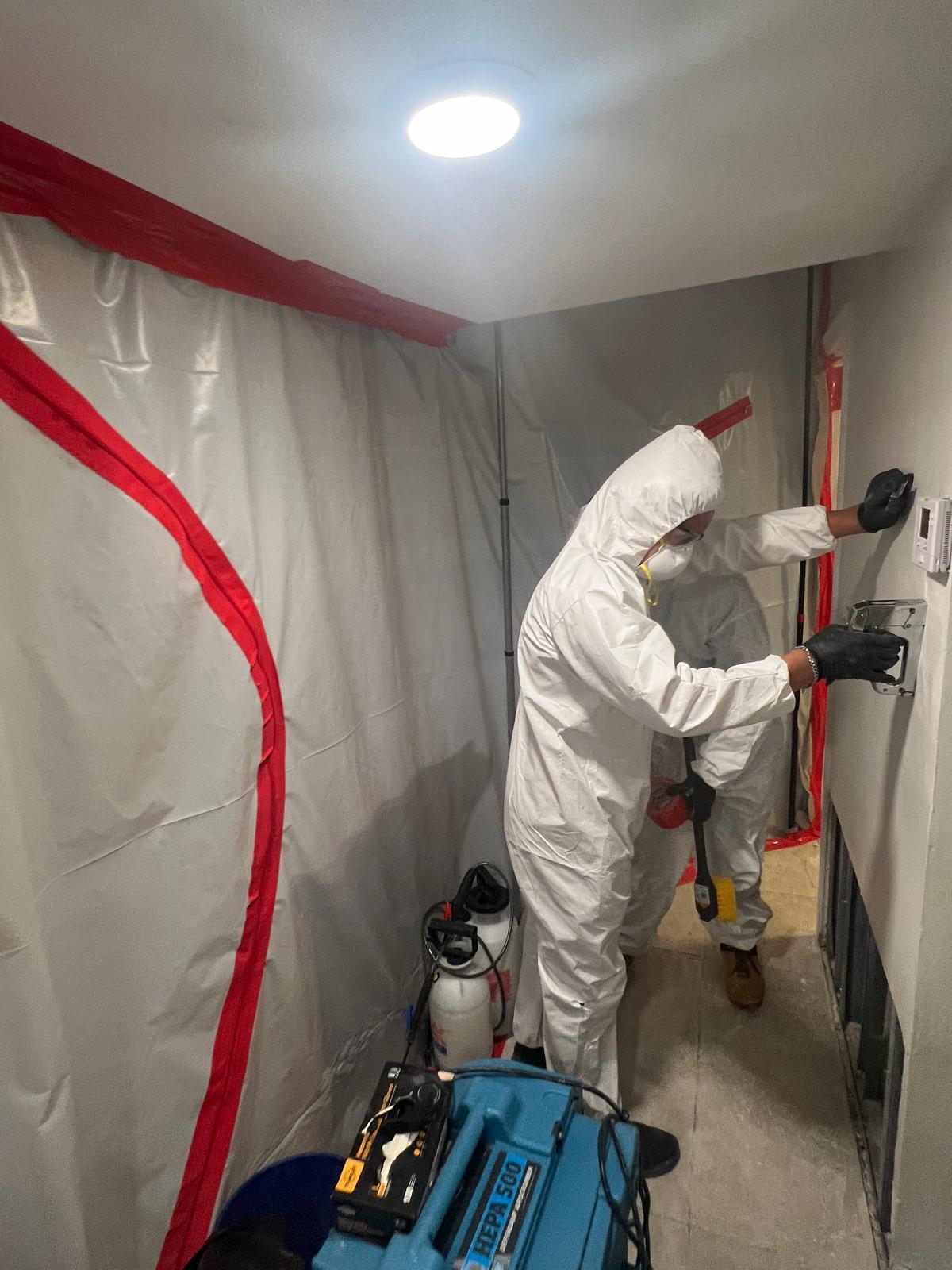
Firefighting efforts often introduce hundreds or thousands of gallons of water into the structure. If left untreated, this water will quickly lead to mold growth and further structural deterioration. During cleanup, the crew performs emergency water removal and deploys commercial dehumidifiers and air movers to dry the remaining structure, preventing secondary water and mold damage. Moisture levels are monitored until the structure reaches drying targets.
In South Florida's high-humidity environment, natural evaporation is extremely slow — the ambient air is often already near saturation and cannot absorb additional moisture from wet building materials. This is why professional drying equipment is essential, not optional. The crew takes daily moisture readings and adjusts the equipment layout as materials dry. Drying typically takes 3 to 5 days, though heavily saturated materials or large volumes of water may extend the timeline.
Documentation During Cleanup
Throughout the cleanup phase, the crew maintains a documentation trail that supports your insurance claim:
- Pre-existing condition photographs showing the state of the property before any work is performed.
- Debris removal inventory listing what was removed, its condition, and the disposal method.
- Moisture readings from the drying phase, showing initial saturation levels and drying progress.
- Scope-of-work report detailing what was done, what remains, and the recommended next phases.
This documentation is shared with you and, when authorized, with your insurance adjuster. It establishes the factual basis for the claim and helps the adjuster understand the scope of the loss. We can also provide a line-item estimate for the remaining phases (smoke cleaning and reconstruction) so the adjuster has a complete picture. See our insurance assistance page for more details on what we provide.
After Cleanup: What Comes Next
After cleanup is complete, the property is stabilized, emptied of unsalvageable materials, and documented. The structure is ready for the next phases of full fire and smoke damage restoration:
- Smoke and soot cleaning of remaining surfaces and the HVAC system.
- Odor neutralization using thermal fogging, hydroxyl generators, or ozone treatment.
- Content restoration — pack-out and specialized cleaning of salvageable belongings.
- Reconstruction — drywall, insulation, flooring, paint, and finishes restored to pre-loss condition.
- Final inspection to verify the property is dry, odor-free, and fully restored.
If the fire damage also involved drywall restoration needs, those are addressed during reconstruction. Throughout, 911 Mitigation Inc. serves as your single point of contact so the phases connect without gaps — the crew that performed the cleanup knows the property's condition and can brief the smoke cleaning and reconstruction teams seamlessly.
Frequently Asked Questions
How long does fire damage cleanup take?
It depends on the size of the affected area and the volume of debris and water. A typical cleanup phase ranges from a few days to a week for larger losses.
Can I stay in my home during cleanup?
In most cases of significant fire damage, it is not safe or practical to remain during cleanup due to debris, soot, drying equipment, and safety hazards. Your insurance may cover temporary lodging.
What should I not do after a fire?
Do not re-enter until cleared, do not turn on utilities, do not discard items before documentation, and do not attempt to clean soot yourself — improper cleaning smears soot deeper into surfaces.
Will the smoke smell go away during cleanup?
Cleanup removes the source of much of the odor, but full odor neutralization happens during the smoke cleaning and odor treatment phases that follow cleanup.
Do I need to hire separate companies for cleanup and restoration?
No. 911 Mitigation Inc. coordinates both phases so the sequence connects properly and you have one point of contact.
What documentation do you provide for my insurance?
We provide pre-existing condition photographs, a debris removal inventory, moisture readings, and a scope-of-work report detailing what was done and what remains.
Preparing for Fire Damage Cleanup?
Call 786-334-4981 — we walk you through what to expect, what to prepare, and the full sequence from cleanup to restoration.