

Smoke & Soot Cleanup in South Florida: What It Is, When You Need It, and Its Limits

Direct Answer
Smoke and soot cleanup is the professional removal of corrosive soot residues, embedded smoke odor, and HVAC contamination from a property after a fire. It is the phase that follows the initial fire damage cleanup — which removes charred debris and stabilizes the structure — and precedes full fire and smoke damage restoration, which includes reconstruction. You need smoke and soot cleanup when soot has coated surfaces, traveled through the HVAC system, or left persistent odor, even if the fire was small and contained. 911 Mitigation Inc. performs smoke and soot cleanup for residential and commercial properties across South Florida.
Table of Contents
What Smoke & Soot Cleanup Is
Smoke and soot cleanup is the controlled, methodology-specific removal of the residues a fire leaves behind on surfaces, in the air, and inside the HVAC distribution system. After a fire is extinguished and the structure is cleared for entry, soot and ash settle across every horizontal surface, and finer smoke particles travel through the air and ductwork into rooms that were never near the fire. The residue is not just a soiling nuisance — soot is acidic and corrosive, and it will permanently etch metals, glass, and stone if left in place.
The work combines several techniques because different soot types respond to different methods. Dry soot from a fast-burning wood or paper fire can often be lifted with dry chemical sponges and HEPA vacuuming. Greasy soot from burning plastics or protein fires requires specialized degreasers and alkaline cleaners. And embedded smoke odor requires molecular treatments — thermal fogging, hydroxyl generation, or ozone — that reach into the pores of materials where surface cleaning cannot. The goal is to return the property to a clean, odor-free, safe-to-rebuild condition.
Smoke and soot cleanup is an action phase, not an assessment and not a finished restoration. It produces clean, deodorized surfaces and a treated HVAC system, but it does not rebuild what was lost — that is the restoration phase. Understanding this distinction prevents the common expectation that smoke cleaning alone will return a property to its pre-fire condition. A property owner who expects smoke cleaning to include reconstruction will be surprised, and a contractor who blurs the lines may underprice the job or skip essential steps that lead to recurring odor.
Why Soot Type Matters
The type of soot present determines the correct cleaning method, and using the wrong method can make the damage worse. Wet-cleaning a dry soot smears it into the surface; dry-sponging a greasy soot drives it deeper into the pores. Identifying the soot type is the first step in our residue assessment:
- Protein smoke — from slow, smoldering kitchen fires — is nearly invisible but highly pungent and coats surfaces with a greasy film that discolors paint over time. It is easy to underestimate and among the hardest odors to remove.
- Wood and paper soot (dry) is powdery and can often be removed with dry sponging and HEPA vacuuming before any wet cleaning is attempted.
- Synthetic soot (wet) — from plastics, rubber, and synthetic fabrics — is heavy, greasy, smears easily, and is among the most toxic, releasing harmful VOCs.
- Fuel-oil soot — from a furnace puff-back — sends a fine black mist through the HVAC system and often affects the entire distribution network.
Because smoke particles are microscopic, they travel through the HVAC system and settle inside the ductwork, where they re-circulate each time the system runs. This is why a small kitchen fire can leave a smoke smell throughout an entire home, and why HVAC cleaning is an essential part of comprehensive smoke cleanup. Without cleaning the ducts, soot redeposits on freshly cleaned surfaces each time the system operates, undoing the surface cleaning and perpetuating the odor.

When You Need Smoke & Soot Cleanup

Common situations that warrant professional smoke and soot cleanup include:
- A fire — large or small — has been extinguished and soot or ash is visible on surfaces, contents, or in the HVAC registers.
- Persistent smoke odor remains after the fire is out, indicating embedded particles in porous materials or ductwork.
- The fire was a protein or kitchen fire that left little visible soot but a strong, lingering odor that household cleaning does not remove.
- Soot has traveled through the HVAC system and is visible in rooms far from the fire's origin.
- An insurance adjuster has authorized smoke cleaning as part of the mitigation scope.
- A furnace puff-back has distributed fuel-oil soot through the HVAC system across the property.
Even a small fire can produce soot that requires professional removal. When soot is visible, when odor persists, or when the HVAC system has distributed the contamination, professional cleanup prevents the residue from causing permanent surface etching and ongoing odor. Delaying cleanup allows the acidic soot to continue corroding surfaces — metals pit, glass etches, and stone discolors — turning a cleaning job into a replacement job. The longer soot sits, the more deeply it bonds with surfaces and the more aggressive the chemistry required to remove it, which is why prompt mobilization after a fire directly reduces both cost and the amount of material that must be replaced.
How Cleanup, Smoke Cleaning & Restoration Relate
Smoke and soot cleanup is one phase of the larger recovery. The sequence matters because each phase prepares the structure for the next:
- 1. Fire damage cleanup removes charred debris, unsalvageable materials, and standing water, and stabilizes the structure. See fire damage cleanup.
- 2. Smoke & soot cleanup removes corrosive residues from remaining surfaces, cleans the HVAC system, and neutralizes embedded odor — this page.
- 3. Structural drying brings remaining moisture to target levels if firefighting water was present. See structural drying and dehumidification.
- 4. Restoration rebuilds drywall, flooring, and finishes to pre-loss condition. See fire and smoke damage restoration.
911 Mitigation Inc. coordinates all phases so a property owner has one point of contact from the first board-up through final reconstruction. Attempting restoration before smoke cleaning is complete traps odor and soot behind new materials, where they will bleed through for months. The sequence is not optional — each phase depends on the one before it, and skipping or rushing a phase leads to recurring problems that cost more to fix later.
Safety Limits and What It Cannot Do
Important limits to understand about smoke and soot cleanup:
- Odor elimination: We do not guarantee complete odor elimination in every circumstance, especially when heavily charred structural materials cannot be removed.
- Porous materials: Some highly porous items — certain fabrics, unsealed wood, contaminated insulation — absorb odor too deeply to be salvaged and require replacement.
- Entry clearance: No one should enter a fire-damaged building until the fire department or a qualified structural professional has cleared it for safe entry.
- Structural safety: We do not certify that a property is structurally safe; that determination requires an appropriate qualified professional.
- Reconstruction: Smoke cleaning does not rebuild what was lost — that is the restoration phase. Surfaces are cleaned and deodorized, but damaged drywall, flooring, and finishes still require replacement.
Health Considerations
Soot contains fine particulates and chemical residues that can affect indoor air quality and respiratory health. The smallest particles — those from synthetic materials and protein fires — can penetrate deep into the lungs and may contain toxic compounds from burned plastics, treated wood, and synthetic fabrics. Disturbing soot without proper protective equipment re-suspends these particles into the air, where they can be inhaled or settle on previously cleaned surfaces.
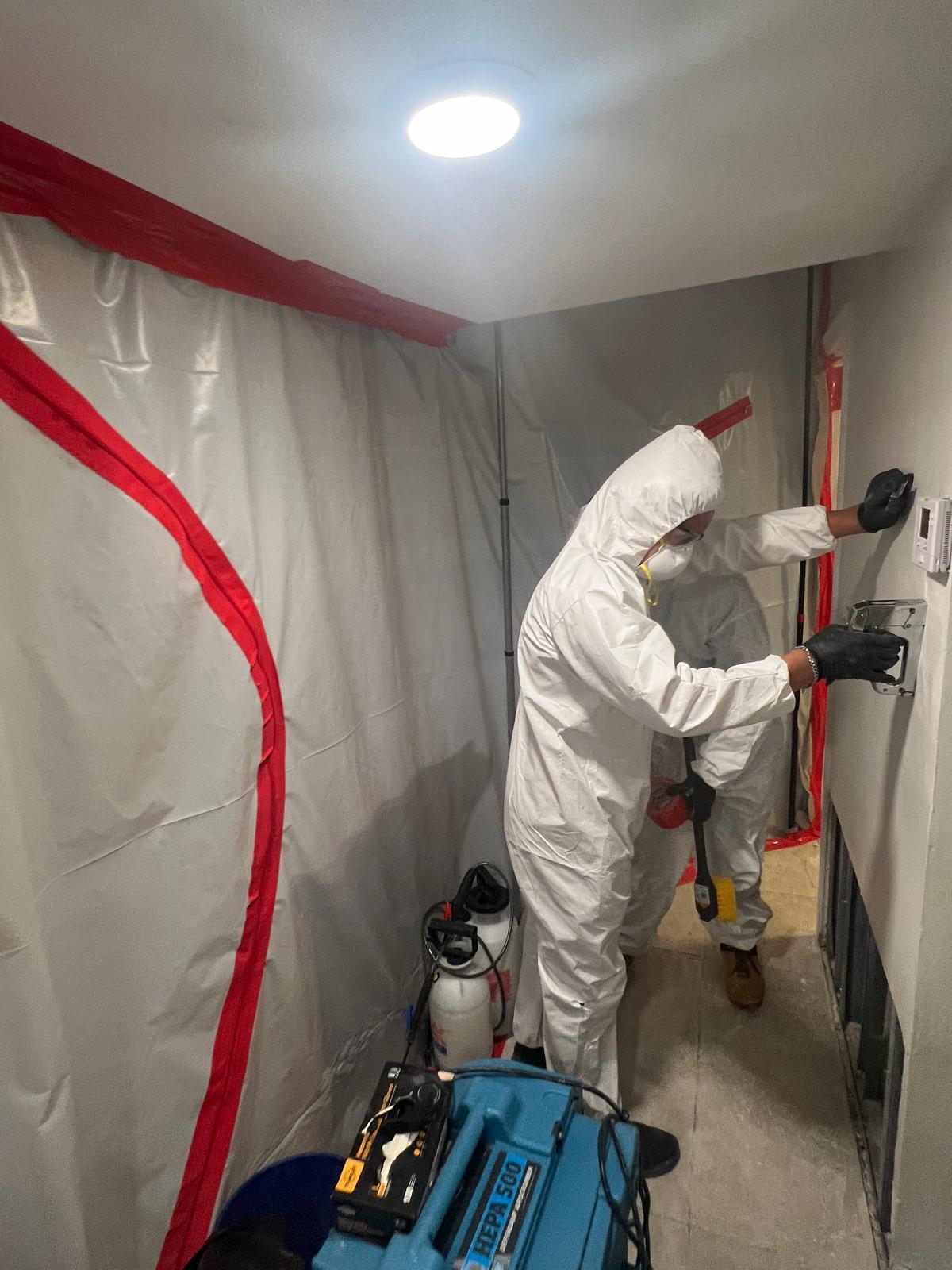
We do not recommend that property owners clean soot themselves without proper protective equipment (respirators with P100 or HEPA filtration, gloves, and protective clothing). Professional crews use HEPA-filtered equipment and containment protocols to capture particles at the source rather than dispersing them. After cleanup, we recommend running HEPA air scrubbers to capture any residual fine particles and to verify that the indoor air quality has returned to acceptable levels before reoccupancy.
For properties with vulnerable occupants — children, the elderly, or those with respiratory conditions — prompt professional soot removal is especially important. Lingering soot and odor can aggravate asthma and other respiratory conditions long after the fire is out. See our mold remediation page for related indoor air quality considerations, as soot contamination and mold growth can coexist when firefighting water introduced moisture.
Frequently Asked Questions
Can I clean soot off the walls myself?
It is not recommended. Standard cleaners and wet sponges often smear soot deeper into the drywall or paint, making it impossible to remove and requiring replacement. Professional crews use the correct method for the soot type.
How is smoke odor treated?
With source removal (cleaning away the soot), sealing surfaces with odor-blocking primers, and molecular treatments — thermal fogging, hydroxyl generation, or ozone — that neutralize embedded odor molecules.
Why does my house smell like smoke when the fire was small?
Smoke particles are microscopic and travel through the HVAC system into carpets, curtains, and ductwork throughout the home. A small kitchen fire can contaminate the whole house.
Will painting over soot hide the damage and smell?
No. Painting over soot does not seal the odor; it will bleed through the paint. The surface must be cleaned, deodorized, and sealed with a stain-blocking primer before any final painting.
Do you use ozone machines?
We may use ozone for severe odors, but only in completely unoccupied properties because high ozone levels are unsafe for humans, pets, and plants. For occupied spaces we use safer hydroxyl generators.
Does smoke cleanup include HVAC cleaning?
Yes. Because smoke travels through the ductwork, HVAC cleaning is an essential part of comprehensive smoke cleanup. Without it, soot re-circulates each time the system runs.
Is soot dangerous to my health?
Yes. Soot contains fine particulates and chemical residues that can affect respiratory health. We do not recommend cleaning soot yourself without proper protective equipment.
Need Smoke & Soot Cleanup in South Florida?
Call 786-334-4981 for professional soot removal, odor neutralization, and HVAC cleaning — we coordinate smoke cleanup through full restoration.