

Smoke Cleanup vs. Full Fire Restoration: Scope, Sequence, and What Each Phase Covers

Direct Answer
Smoke and soot cleanup and full fire restoration are sequential phases, not competing options. Smoke cleanup removes corrosive soot residues, cleans the HVAC system, and neutralizes embedded odor so the structure is safe to rebuild. Full restoration encompasses smoke cleanup plus fire damage cleanup (debris removal and stabilization), structural drying, content restoration, and complete reconstruction back to pre-loss condition. Smoke cleanup must be completed before reconstruction can proceed. 911 Mitigation Inc. coordinates both phases for South Florida properties.
Table of Contents
Scope Comparison
The difference between smoke cleanup and full restoration is best understood by what each phase produces. Smoke cleanup produces a clean, deodorized, safe-to-rebuild structure with a treated HVAC system. Full restoration produces a property returned to its pre-loss condition. The distinction:
- Smoke cleanup includes: residue assessment by soot type, dry and wet surface cleaning, HVAC duct cleaning, molecular odor neutralization (thermal fogging, hydroxyl, ozone), content cleaning where salvageable, and documentation of conditions.
- Full restoration adds: the preceding fire damage cleanup (debris removal, board-up, tarping), structural drying where firefighting water was present, drywall and flooring replacement, painting and finishing, and final inspection. See drywall restoration and dehumidification.
- Overlap: both share the goal of making the property safe and habitable, but smoke cleanup is the cleaning and deodorizing prerequisite, not the finished rebuild.
A property owner who hires a company for "smoke cleanup only" will receive a clean, deodorized structure with exposed framing and missing drywall — ready for reconstruction but not finished. A property owner who hires a company for "full restoration" receives a property that looks and smells as if the fire never happened. The price difference reflects the difference in work, materials, and timeline — not a difference in the quality of the smoke cleaning itself.
The Correct Sequence
Attempting reconstruction before smoke cleanup is complete traps odor and soot behind new materials. The correct sequence is:
- 1. Fire damage cleanup: debris removal, tear-out of unsalvageable materials, board-up and tarping, and initial emergency water removal.
- 2. Smoke & soot cleanup: soot removal from remaining surfaces, HVAC duct cleaning, and molecular odor neutralization — this page.
- 3. Structural drying: bringing remaining moisture to target levels if firefighting water was present.
- 4. Reconstruction: drywall, insulation, flooring, paint, and finishes restored to pre-loss condition.
- 5. Final inspection: verification that the property is clean, dry, odor-free, and fully restored.
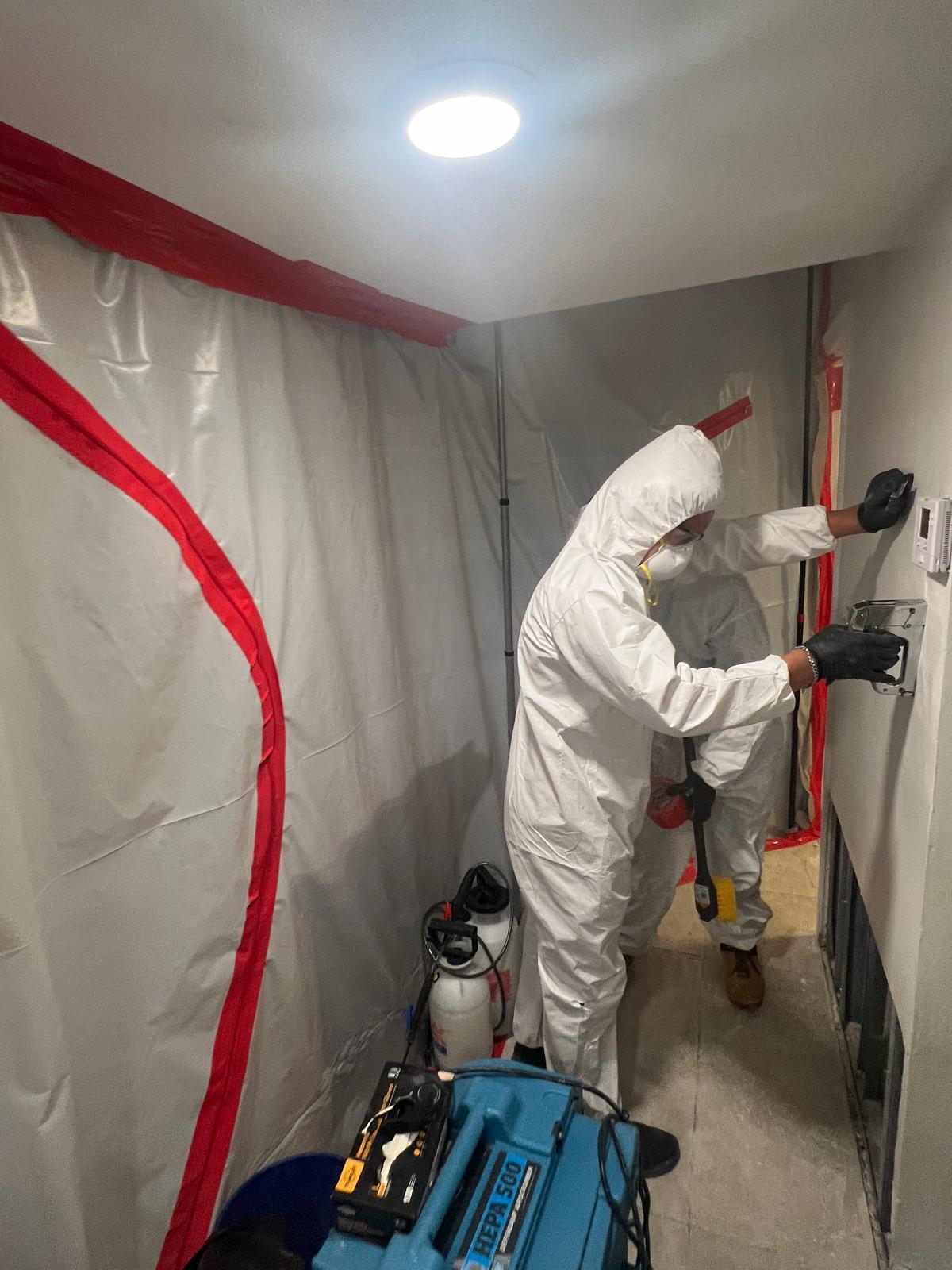
911 Mitigation Inc. coordinates the full sequence so the phases connect without gaps. The benefit of a single point of contact is that the documentation and scope carry forward cleanly — the crew that cleaned the soot knows what was removed and what the drying and reconstruction crews need to do next. When multiple companies handle different phases, documentation gaps lead to disputes and the risk that one contractor's work undoes another's.
Odor Treatment vs. Reconstruction
One of the most common mistakes in fire recovery is sequencing odor treatment and reconstruction in the wrong order. Smoke odor penetrates deep into porous materials — wood, drywall, fabrics, and the dust inside ductwork — where surface cleaning cannot reach. If new drywall and paint are installed before the underlying materials have been deodorized, the odor molecules trapped behind the new finish will bleed through for months, sometimes years.
This is why odor neutralization belongs in the smoke cleanup phase, before reconstruction. Molecular treatments (thermal fogging recreates the heat and pressure of the fire to push deodorizer into the same pores the smoke entered; hydroxyl generators use UV light to create radicals that safely break down odors and VOCs; ozone chemically alters severe odor molecules in unoccupied spaces) reach the embedded particles that cleaning cannot. Only after the structure is clean and odor-free should reconstruction begin, and any surfaces that still hold odor should be sealed with an odor-blocking primer before new finishes are applied.

The cost of getting this sequence wrong is significant. If odor bleeds through after reconstruction, the only remedy is to remove the new drywall and finishes, retreat the underlying surfaces, and reinstall — effectively paying for the reconstruction twice. This is why experienced restoration companies insist on completing odor neutralization before any reconstruction begins, even when the property owner is eager to move quickly.
Cost and Scope Factors

Several factors influence the scope and cost of both smoke cleanup and full restoration:
- Soot type: Protein and synthetic soots are harder and more expensive to remove than dry soot because they require more aggressive methods and longer odor treatment.
- HVAC contamination: When soot has traveled through the ductwork, the entire distribution system must be cleaned, adding scope.
- Smoke travel: A small fire can contaminate a large area through the HVAC system, expanding the cleaning scope far beyond the fire's origin.
- Reconstruction scope: The volume of drywall, flooring, and finishes to be replaced drives most of the full-restoration cost.
- Contents: The volume of salvageable versus unsalvageable contents affects pack-out, cleaning, and disposal scope.
- Porous material replacement: Items that absorbed odor too deeply to salvage — certain fabrics, unsealed wood, contaminated insulation — must be replaced, adding to both phases.
Because these factors compound, the gap between a "cleanup only" estimate and a "full restoration" estimate can be wide, and a low cleanup quote that ignores HVAC contamination or embedded odor will almost always grow once the hidden scope surfaces. A reputable contractor scopes the full loss up front — soot type, HVAC travel, porous-material absorption, and reconstruction volume — so the comparison between cleanup and restoration reflects the real work each phase requires, not an artificially narrowed cleanup number.
Timeline Differences
The smoke cleanup phase typically takes a few days to over a week, depending on the soot type and HVAC contamination. Protein and synthetic soots take longer because they require more aggressive cleaning and extended odor treatment. HVAC duct cleaning adds time proportional to the size of the distribution system. During this phase, the property should generally be unoccupied, especially if ozone treatment is used, and the timeline can extend when repeated odor treatments are needed to reach embedded molecules that a single pass did not fully neutralize.
The reconstruction phase is the longest and most variable. It depends on material availability, the scope of drywall and flooring replacement, the complexity of matching existing finishes, and insurance approval timelines. Reconstruction can range from a few days for a small contained fire to several weeks for a larger loss. For commercial properties, we phase the work and schedule after-hours whenever possible to minimize business interruption, and we coordinate directly with property managers and insurance adjusters so that approval delays do not stall the reconstruction schedule.
Questions to Ask Before Hiring
- Do you handle both smoke cleanup and full restoration, or only one phase?
- How do you determine the soot type, and how does that affect your cleaning method?
- Do you clean the HVAC ductwork, or only the visible surfaces?
- What odor-neutralization methods do you use, and when is each appropriate?
- How do you verify the structure is odor-free before reconstruction begins?
- How do you document the smoke cleanup scope for my insurance claim?
- What is your estimated timeline for each phase, and what factors could extend it?
Frequently Asked Questions
Can I skip smoke cleanup and just repaint?
No. Painting over soot does not seal the odor; it traps it behind the paint and the smell will bleed through. Surfaces must be cleaned, deodorized, and sealed with a stain-blocking primer before repainting.
Is smoke cleanup cheaper than full restoration?
Smoke cleanup is a smaller scope than full restoration, but the total project cost depends on the fire size, soot type, HVAC contamination, and reconstruction needed. Cleanup is one phase of the total.
How long does smoke cleanup take?
It depends on the extent of soot and odor and whether the HVAC system is contaminated. Typical smoke cleanup ranges from a few days to over a week for severe contamination.
Will the smoke smell come back after reconstruction?
If odor is fully neutralized before reconstruction and any remaining odor sources are sealed, the smell should not return. Skipping odor treatment is the most common cause of recurring odor.
Do you coordinate with my insurance adjuster?
Yes. We document the smoke cleanup scope and conditions and can coordinate with your adjuster. See our insurance assistance page for what we typically provide.
How long does full restoration take after smoke cleanup?
Reconstruction timelines vary based on scope, material availability, and insurance approvals. It can range from a few days to several weeks for larger losses.
Comparing Smoke Cleanup and Restoration for Your Property?
Call 786-334-4981 — we explain the sequence, scope, and documentation for your specific smoke and soot loss.