

Mold Removal vs. Mold Remediation: Scope, Sequence, and What Each Phase Covers

Direct Answer
Mold removal and mold remediation are sequential and overlapping scopes, not competing options. Mold removal is the physical extraction and disposal of contaminated materials and the cleaning of affected surfaces under containment. Mold remediation encompasses removal plus inspection, moisture source identification and correction, containment setup, air filtration, content cleaning, and post-remediation verification. Removal is one component of the full remediation process. 911 Mitigation Inc. coordinates both scopes for South Florida properties so owners receive the complete process, not just material extraction.
Table of Contents
Scope Comparison
The difference between mold removal and mold remediation is best understood by what each scope produces. Mold removal produces a property with contaminated materials extracted and affected surfaces cleaned. Mold remediation produces a property with the moisture source corrected, the contamination removed, and the environment verified as returning to normal fungal ecology. The distinction:
- Mold removal includes: containment setup, PPE, physical removal and disposal of contaminated porous materials, antimicrobial cleaning of remaining surfaces, HEPA vacuuming, and HVAC cleaning if contamination was present.
- Mold remediation adds: inspection and scope definition, moisture source identification and correction, content cleaning and pack-out, drying of remaining moisture, and post-remediation verification (clearance testing). See mold remediation and mold inspection.
- Overlap: both share the goal of removing the mold, but removal is the extraction step within the broader remediation process, not a substitute for it.
A property owner who hires a company for "mold removal" only may receive material extraction without moisture correction — meaning the mold is likely to return as soon as the conditions that supported growth persist. A property owner who hires a company for full remediation receives the complete process: identification, removal, moisture correction, and verification. The price difference reflects the difference in scope, not a difference in the quality of the removal itself.
The Correct Sequence
The correct sequence for addressing a mold problem is:
- 1. Inspection: A thorough mold inspection identifies the type, extent, and moisture source of the mold growth and defines the remediation scope.
- 2. Moisture correction: The moisture source — a leak, condensation, or water damage — is identified and corrected. Without this, removal is temporary.
- 3. Containment: The work area is isolated with polyethylene barriers and placed under negative air pressure.
- 4. Removal: Contaminated porous materials are extracted, bagged, and disposed of; remaining surfaces are cleaned.
- 5. Drying: Any remaining moisture is brought to target levels. See structural drying and dehumidification.
- 6. Verification: Post-remediation verification confirms the mold has been removed and the environment has returned to normal fungal ecology.
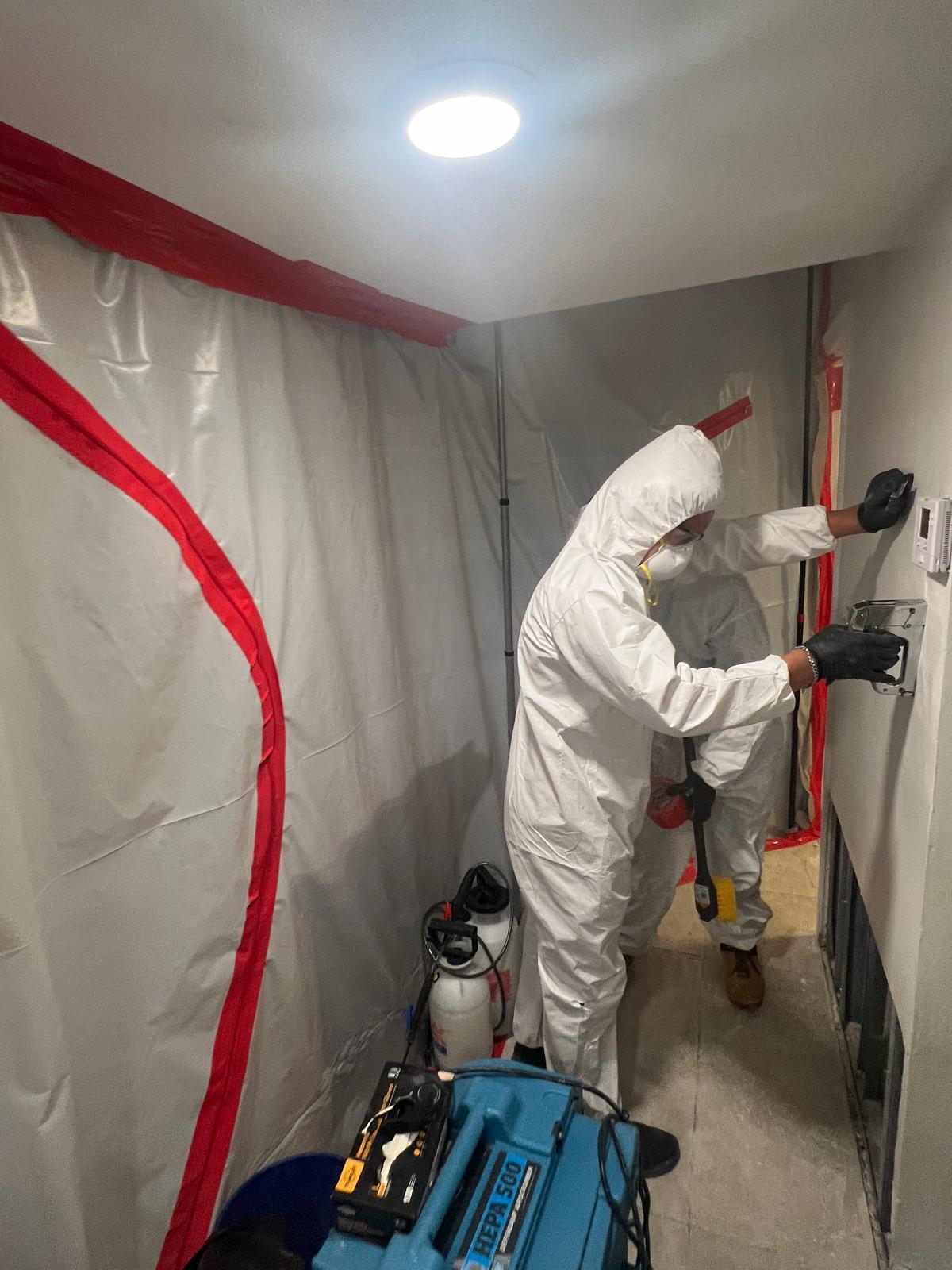
911 Mitigation Inc. coordinates the full sequence so a property owner has one point of contact from inspection through verification. The benefit of a single point of contact is that the documentation and scope carry forward cleanly — the crew that performed the removal knows the property's condition and can brief the verification team. When multiple companies handle different phases, documentation gaps lead to disputes and the risk that one contractor's work undoes another's.
Cost and Scope Factors
Several factors influence the scope and cost of both mold removal and full remediation:
- Contamination extent: The area affected — a single wall versus multiple rooms or floors — drives the scope of containment, removal, and cleaning.
- Material type: Porous materials (drywall, insulation, carpet) generally require removal and replacement; non-porous surfaces (metal, glass, sealed concrete) can often be cleaned. The mix affects cost.
- Moisture source complexity: A simple plumbing leak is straightforward to correct; a hidden roof leak or slab leak may require specialized diagnosis.
- HVAC contamination: When mold has entered the ductwork, the entire system must be cleaned, adding significant scope.
- Contents: The volume of salvageable versus unsalvageable contents affects pack-out, cleaning, and disposal scope.
- Verification requirements: Post-remediation clearance testing adds cost but provides documented confirmation that the mold was successfully removed.
Timeline Differences
The mold removal phase is typically the most labor-intensive — ranging from 1–2 days for a small contained area to a week or more for multi-room contamination. During this phase, the containment remains in place and the property may be partially or fully uninhabitable, depending on the scope and location.
The moisture correction phase varies widely depending on the source. A simple plumbing repair may take hours; a roof replacement or slab leak repair may take days or weeks and may involve other contractors. The drying phase — bringing remaining materials to target moisture levels — typically takes 3 to 5 days using commercial dehumidifiers and air movers.
Post-remediation verification is typically conducted 24 to 48 hours after the removal and drying are complete, allowing time for airborne spore levels to settle. The full remediation process, from inspection to clearance, can range from under a week for a small contained project to several weeks for a large or complex loss.
Post-Remediation Verification
Post-remediation verification — also called clearance testing — is the step that distinguishes full remediation from removal alone. After the removal and drying are complete, a verification is performed to confirm that the mold has been successfully removed and the environment has returned to normal fungal ecology. This typically involves visual inspection, surface sampling, and air sampling to compare spore levels inside and outside the containment.
Clearance testing provides documented confirmation that the remediation was successful — which is valuable for insurance claims, real estate transactions, and the property owner's peace of mind. Without verification, there is no objective evidence that the mold was removed. We can arrange post-remediation verification as part of the full remediation process or coordinate with an independent third-party assessor for an additional layer of objectivity.
Questions to Ask Before Hiring
- Do you handle both removal and full remediation, or only removal?
- How do you identify and correct the moisture source that allowed the mold to grow?
- What containment and negative air pressure protocols do you use?
- Do you provide post-remediation verification or clearance testing?
- How do you document the scope for my insurance claim?
- Do you clean the HVAC system if mold was present in or around the ducts?
- What is your estimated timeline for each phase, and what factors could extend it?
Frequently Asked Questions
Can I skip remediation and just have the mold removed?
You can, but the mold is likely to return if the moisture source is not corrected. Removal without remediation is temporary — we recommend the full process.
Is removal cheaper than full remediation?
Removal is a smaller scope, but the total project cost depends on the contamination extent, moisture source complexity, and whether verification is needed. Removal is one phase of the total.
How long does the full remediation process take?
It ranges from under a week for a small contained project to several weeks for a large or complex loss, depending on the contamination extent and moisture source complexity.
What is post-remediation verification?
Clearance testing that confirms the mold was successfully removed and the environment has returned to normal fungal ecology, typically through visual inspection and air/surface sampling.
Does insurance cover mold remediation?
Coverage depends on your policy and the cause. Mold from a covered water damage event is often covered; mold from deferred maintenance may not be. We provide documentation to support your claim.
Do I need a separate company for inspection and removal?
Not necessarily. We can handle the full process, though some property owners prefer an independent third-party inspection for objectivity. We can coordinate with independent assessors.
Comparing Mold Removal and Remediation for Your Property?
Call 786-334-4981 — we explain the sequence, scope, and documentation for your specific mold situation.