


Mold Removal in South Florida: What It Is, When You Need It, and Its Limits

Direct Answer
Mold removal is the physical extraction and disposal of mold-contaminated materials from a property, combined with controlled cleaning of affected surfaces under containment. It is one component of the broader mold remediation process — which also includes moisture source identification, containment, air filtration, and post-remediation verification. You need mold removal when visible mold growth is present on building materials, when contaminated materials must be physically removed, or when a mold inspection has identified an active growth colony. 911 Mitigation Inc. performs mold removal for residential and commercial properties across South Florida, following industry-standard containment and disposal protocols.
Table of Contents
What Mold Removal Is
Mold removal is the physical extraction of mold-contaminated materials from a property and the controlled cleaning of affected surfaces. When mold colonizes porous materials — drywall, insulation, wood framing, carpet and padding — those materials often cannot be effectively cleaned in place and must be physically removed, bagged under containment, and disposed of. Non-porous and semi-porous surfaces that can be cleaned are treated with appropriate antimicrobial agents and HEPA-vacuumed to remove spores.
The process is conducted under containment — physical barriers (typically polyethylene sheeting sealed at the edges) that isolate the work area from the rest of the property — and under negative air pressure, which uses HEPA-filtered exhaust to keep airborne spores from escaping the containment zone. Without containment, disturbing mold-contaminated materials releases millions of spores into the air, spreading the contamination to previously unaffected areas and creating exposure risks for occupants.
Mold removal is an action phase, not an assessment and not a guarantee of a mold-free environment. It produces a property with contaminated materials removed and affected surfaces cleaned, but it does not address the underlying moisture source that allowed the mold to grow. Without fixing the moisture problem, mold will return — which is why mold removal is one component of the broader mold remediation process, not a standalone solution.
Mold Removal vs. Mold Remediation
The terms "mold removal" and "mold remediation" are often used interchangeably, but they describe different scopes:
- Mold removal is the physical extraction and disposal of mold-contaminated materials and the cleaning of affected surfaces under containment.
- Mold remediation is the comprehensive process that encompasses removal plus moisture source identification and correction, containment setup, air filtration, content cleaning, and post-remediation verification. See mold remediation.
- Mold inspection is the assessment phase — identifying the type, extent, and moisture source of mold growth. See mold inspection.
A property owner who hires a company for "mold removal" only may receive contaminated material extraction without moisture correction or post-remediation verification — meaning the mold is likely to return. A property owner who hires a company for full remediation receives the complete process: identification, removal, moisture correction, and verification. Understanding this distinction prevents the common expectation that removing visible mold alone solves the problem.
When You Need Mold Removal
Common situations that warrant professional mold removal include:
- Visible mold growth is present on drywall, wood framing, insulation, carpet, or other building materials.
- A mold inspection has identified an active growth colony and a defined remediation scope.
- Mold has developed after water damage — a burst pipe, roof leak, or water damage event — that was not dried promptly.
- Mold is present in HVAC ductwork or around HVAC components, where it can distribute spores throughout the property.
- An insurance adjuster has authorized mold remediation as part of a covered water damage claim.
- A real estate inspection has revealed mold growth that must be addressed before a property sale can close.
Mold growth can begin within 24 to 48 hours of a moisture event in South Florida's humid climate. When visible growth is present, or when an inspection confirms colonization, professional removal under containment prevents the spores from spreading and the contamination from worsening. Delaying removal allows the colony to continue growing and releasing spores, increasing the scope and cost of the eventual remediation.
The Mold Removal Process
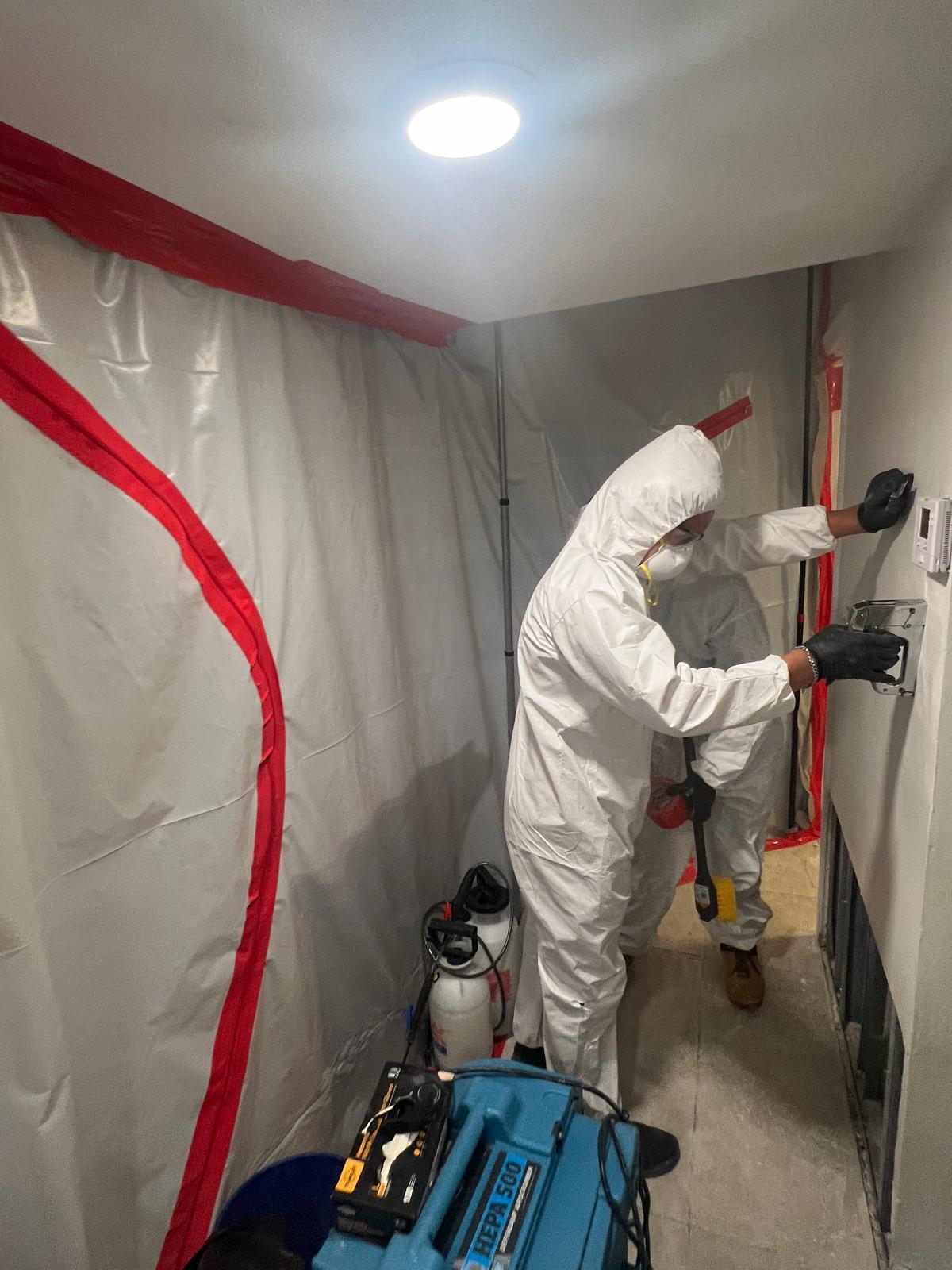
A professional mold removal project follows a structured sequence:
- 1. Containment setup: The work area is isolated with polyethylene barriers and placed under negative air pressure using HEPA-filtered exhaust.
- 2. Personal protective equipment: The crew wears appropriate PPE — respirators with P100 or HEPA filtration, gloves, and protective suits.
- 3. Material removal: Mold-contaminated porous materials (drywall, insulation, carpet and padding) are removed, bagged in 6-mil polyethylene bags under containment, and disposed of.
- 4. Surface cleaning: Remaining semi-porous and non-porous surfaces (wood framing, concrete, metal) are cleaned with appropriate antimicrobial agents and HEPA-vacuumed to remove settled spores.
- 5. HVAC cleaning: If mold was present in or around the HVAC system, the ductwork and components are cleaned to prevent re-contamination. See structural drying for related moisture considerations.
- 6. Moisture correction: The moisture source that allowed the mold to grow is identified and corrected — without this, the mold will return.
Safety Limits and What It Cannot Do
Important limits to understand about mold removal:
- No "mold-free" guarantee: Mold spores are naturally present in the environment. We cannot guarantee that mold will never return, especially if the underlying moisture issue is not corrected or if a new water event occurs.
- Moisture dependency: Mold removal without correcting the moisture source is temporary. The mold will return as long as the conditions that supported growth persist.
- Hidden mold: Mold behind walls, under flooring, or in concealed spaces may not be visible without a thorough inspection. Removal addresses identified contamination; hidden growth requires inspection to locate.
- Health effects: We do not provide medical advice or guarantee specific health outcomes. Individuals with mold sensitivities should consult a healthcare provider. Mold removal reduces exposure but cannot reverse existing health effects.
- Porous material salvage: Heavily contaminated porous materials often cannot be salvaged and must be removed and replaced. We cannot "clean" mold out of saturated insulation or compromised drywall.
South Florida Mold Considerations
South Florida's climate presents unique mold challenges. The combination of high year-round humidity, frequent heavy rainfall, tropical storms, and aging plumbing infrastructure means that moisture intrusion is a constant risk. Mold can begin growing within 24 to 48 hours of a moisture event, and the high ambient humidity means that natural drying is extremely slow — wet materials stay wet longer than in drier climates, giving mold more time to colonize.
Common South Florida mold triggers include air conditioning condensation line clogs (a frequent issue that drips water into ceilings and walls), roof leaks during storm season, plumbing failures in older properties, and storm-related water intrusion through compromised roofs and windows. After any water event, prompt dehumidification and drying are essential to prevent mold from establishing. Properties in coastal areas face added salt-air corrosion of HVAC components, which can accelerate condensation issues.
For commercial properties — hotels, apartments, offices — mold can affect multiple units or floors, requiring phased removal that minimizes tenant disruption. Our commercial crews can work after hours and coordinate with property managers. See commercial mold remediation for commercial-specific considerations.
Frequently Asked Questions
Can I remove mold myself with bleach?
It is not recommended for anything beyond small spots on non-porous surfaces. Bleach does not effectively kill mold on porous materials like drywall, and disturbing mold without containment releases spores into the air. Professional removal uses containment, HEPA filtration, and proper disposal protocols.
Is mold removal the same as mold remediation?
No. Removal is the physical extraction of contaminated materials. Remediation is the comprehensive process that includes removal plus moisture correction, containment, and verification. We recommend the full remediation process.
How long does mold removal take?
It depends on the extent of contamination. A small contained area may take 1–2 days, while larger projects spanning multiple rooms or floors can take several days to a week.
Will the mold come back?
If the moisture source is corrected and the area is kept dry, mold should not return. Without moisture correction, mold will return — which is why remediation includes identifying and fixing the source.
Do you guarantee mold will not return?
We cannot guarantee that mold will never return, because mold spores are naturally present in the environment and any future moisture event can trigger new growth. We do correct the identified moisture source as part of remediation.
Does insurance cover mold removal?
Coverage depends on your policy and the cause. Mold resulting from a covered water damage event is often covered, while mold from deferred maintenance or long-term humidity may not be. We provide documentation to support your claim.
Is mold dangerous to my health?
Mold can affect indoor air quality and may cause symptoms in sensitive individuals. We do not provide medical advice; consult a healthcare provider for health concerns. Professional removal reduces exposure.
Need Mold Removal in South Florida?
Call 786-334-4981 for professional mold removal under containment — we coordinate removal through full remediation and moisture correction.