

Fire Damage Cleanup in South Florida: What It Is, When You Need It, and Its Limits

Direct Answer
Fire damage cleanup is the safe removal of charred debris, unsalvageable building materials, and hazardous residues from a property after a fire has been extinguished and the structure has been cleared for entry. It is the first physical phase of recovery — distinct from full fire and smoke restoration, which also includes smoke cleaning, odor neutralization, and reconstruction. You need cleanup when a fire has left debris, compromised materials, or standing water from firefighting efforts that must be removed before any drying, cleaning, or rebuilding can begin. 911 Mitigation Inc. performs fire damage cleanup for residential and commercial properties across South Florida and coordinates the subsequent restoration phases.
Table of Contents
- 1. What Fire Damage Cleanup Is
- 2. What Cleanup Includes and Excludes
- 3. When You Need Fire Damage Cleanup
- 4. Cleanup vs. Restoration vs. Smoke Cleaning
- 5. Safety Limits and What Cleanup Cannot Do
- 6. South Florida Considerations
- 7. Common Misconceptions About Fire Cleanup
- 8. Frequently Asked Questions
What Fire Damage Cleanup Is
Fire damage cleanup is the controlled, safety-first removal of everything a fire has left behind that cannot be saved or that poses a hazard to the people who will work in the structure next. After the fire department releases a property, the building is often left with a mix of charred structural materials, collapsed contents, soaked insulation and drywall from hose lines, broken windows, and a fine layer of acidic soot and ash across every horizontal surface. Cleanup is the process of sorting, removing, and disposing of those materials so the structure is stable, accessible, and ready for the next phase.
Cleanup is an action step, not an assessment and not a finished restoration. It produces an emptied, stabilized structure and a documented inventory of what was removed and why. It does not, by itself, remove embedded smoke odor from remaining materials, neutralize soot inside the HVAC system, or rebuild what was lost. Those are separate scopes that follow. Understanding this distinction prevents the common expectation that cleanup alone will return a property to its pre-fire condition.
The cleanup phase sets the foundation for every subsequent step. If debris is left in place, it continues to shed soot and ash into the air each time someone walks through the structure, recontaminating surfaces that the smoke cleaning crew would later treat. If standing water from hose lines is not extracted promptly, it migrates into drywall, subfloor, and framing — turning a fire loss into a compounded fire-plus-water loss that supports mold growth within 24 to 48 hours in South Florida's humid climate. This is why cleanup is not a luxury or an optional step; it is the essential first action that determines whether the downstream phases succeed or fail.
What Cleanup Includes and Excludes
A typical fire damage cleanup includes:
- Safety assessment of the structure before any work begins, including checking for structural instability, electrical hazards, and residual heat.
- Emergency board-up of broken windows and tarping of damaged roof sections to secure the property against weather and unauthorized entry.
- Removal of charred debris, collapsed contents, and ruined building materials, with segregation of materials that require specialized disposal.
- Tear-out of compromised drywall, insulation, and flooring that is charred or saturated with firefighting water, down to the studs where necessary.
- Initial water extraction and deployment of drying equipment to address the standing water introduced by hose lines, preventing secondary water damage and mold growth.
- Documentation of removed materials and conditions for insurance purposes, including photographs, moisture readings, and a scope-of-work inventory.
Cleanup typically excludes the detailed smoke and soot cleaning of surfaces that will remain, molecular odor neutralization, HVAC duct cleaning, content pack-out and specialized restoration of salvageable belongings, and all reconstruction. Those are separate scopes that follow cleanup and are part of the broader fire and smoke damage restoration process. A property owner who expects cleanup to include odor removal or reconstruction will be surprised — and a contractor who blurs the lines may underprice the job or skip essential steps that lead to recurring odor and hidden mold.

When You Need Fire Damage Cleanup
Common situations that warrant professional fire damage cleanup include:
- A structure fire — large or small — has been extinguished and the fire department has released the property.
- Charred debris, collapsed materials, or burnt contents are present and must be removed before any other work can proceed.
- Firefighting efforts have left standing water that needs immediate emergency water removal and drying to prevent mold.
- Windows, doors, or the roof have been compromised and the property needs board-up or tarping to remain secure.
- An insurance adjuster has authorized mitigation work to begin and expects documentation of the initial scope.
- A small kitchen fire has left soot and residue far beyond the burn area, requiring professional assessment of the full extent.
Even a small kitchen fire can leave soot and residue far beyond the burn area. When smoke has traveled through the HVAC system or water has pooled from hose lines, cleanup is needed to remove the physical debris and standing water before smoke cleaning and odor treatment can be effective. Delaying cleanup allows soot to continue etching surfaces and allows standing water to begin supporting mold — compounding the loss and increasing the total restoration cost.
Cleanup vs. Restoration vs. Smoke Cleaning
These three terms describe different phases, and confusing them leads to mismatched expectations:
- Cleanup removes what cannot be saved — debris, charred materials, standing water — and stabilizes the structure.
- Smoke and soot cleaning treats the surfaces and materials that remain, removing corrosive residues and neutralizing embedded odor so the structure is safe to rebuild.
- Restoration rebuilds the property — replacing drywall, flooring, and finishes — and returns it to its pre-loss condition.
911 Mitigation Inc. coordinates all three phases so a property owner has one point of contact from the first board-up through final reconstruction. The cleanup phase must be completed before smoke cleaning can be fully effective, and smoke cleaning must be completed before reconstruction begins. Attempting to reconstruct before smoke cleaning is complete traps odor and soot behind new materials, where they will bleed through for months or years.
Safety Limits and What Cleanup Cannot Do
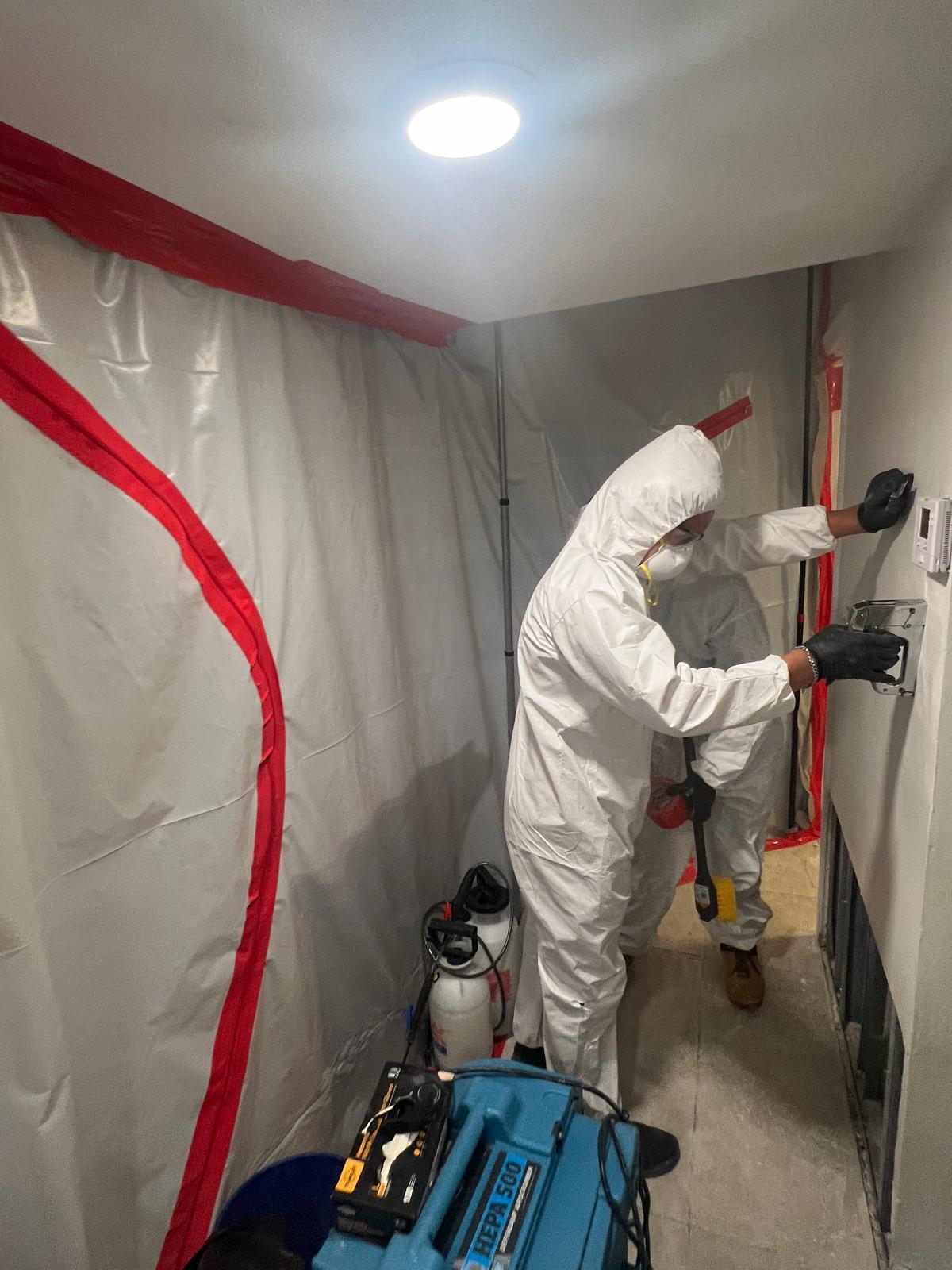
Safety is the controlling priority during fire damage cleanup. Important limits to understand:
- Entry clearance: No one should enter a fire-damaged building until the fire department or a qualified structural professional has explicitly cleared it for safe entry.
- Structural safety: We do not certify that a property is structurally safe; that determination requires an appropriate qualified professional.
- Electrical hazards: Electrical power should not be restored in a fire- or water-damaged structure until the system has been inspected by a licensed electrician.
- Salvage limits: Cleanup removes unsalvageable materials; it cannot restore charred or structurally compromised framing, and some contents may require specialized off-site cleaning or replacement.
- Odor removal: Cleanup removes the source of much of the odor but does not neutralize embedded smoke molecules — that is the smoke cleaning phase.
South Florida Considerations
South Florida's heat and humidity accelerate the secondary damage that follows a fire. Standing water from firefighting efforts can begin supporting mold growth in 24 to 48 hours, and high humidity drives moisture into remaining building materials faster than in drier climates. This makes rapid water extraction and drying during the cleanup phase especially important. After a fire coincides with storm season, a compromised roof or broken windows can allow additional storm-related water intrusion, so emergency tarping and board-up should be completed quickly. Properties in coastal areas like Miami Beach or the Keys face added salt-air corrosion on fire-damaged metal components, which accelerates deterioration if not addressed promptly.
Commercial properties — retail spaces, restaurants, warehouses — face additional considerations. Business interruption costs accumulate daily, and inventory losses must be documented for insurance. Our commercial cleanup crews can work after hours to minimize disruption and coordinate with property managers to phase the work so operations can resume in unaffected areas when safe. See our commercial mitigation services for more on commercial-specific considerations.
Common Misconceptions About Fire Cleanup
Several misconceptions lead property owners to underestimate what fire damage cleanup involves — or to skip it entirely:
- "The fire was small, so I can handle the cleanup myself." Even a small fire produces toxic soot and ash. Without proper PPE, containment, and disposal protocols, DIY cleanup re-suspends hazardous particles into the air and can cause respiratory issues. Additionally, the structure may have hidden damage that a professional assessment would catch.
- "The smoke smell will go away on its own." Smoke odor penetrates porous materials and does not dissipate without molecular treatment. Opening windows in South Florida's humid air actually introduces more moisture, which can worsen the problem.
- "I should save money by skipping cleanup and going straight to repainting." Painting over soot traps the odor and the acidic residue beneath the paint. The soot will continue to corrode the surface underneath, and the smell will bleed through within weeks.
- "The water from the hoses will just dry on its own." In South Florida's high humidity, natural evaporation is extremely slow. The water migrates into building materials, causing structural damage and mold growth long before it would dry naturally.
Understanding what cleanup does and does not accomplish helps property owners make informed decisions and avoid the costly mistakes that turn a manageable fire loss into a prolonged, expensive restoration.
Frequently Asked Questions
When can cleanup start after a fire?
Cleanup can begin once the fire department has released the property and deemed it safe to enter, and after your insurance adjuster has authorized mitigation to proceed.
Does cleanup include removing all the drywall?
Drywall that is charred, structurally compromised, or heavily saturated with firefighting water is removed down to the studs so the framing can dry and be treated. Drywall that is unaffected is left in place.
Do you handle the water from the fire hoses?
Yes. Water extraction and structural drying are part of the cleanup phase to prevent mold growth and further damage, using the same protocols as our water damage restoration process.
Will you secure the property?
Yes. If windows were broken or the roof was damaged, we provide emergency board-up and tarping to secure the property against weather and unauthorized entry.
Is cleanup the same as restoration?
No. Cleanup removes debris and stabilizes the structure. Smoke cleaning treats remaining surfaces and odor. Restoration rebuilds the property. We coordinate all three phases.
Can I start cleanup myself?
It is not recommended. Fire debris can contain toxic residues and the structure may have hidden hazards. Professional crews have the PPE, training, and disposal protocols to handle it safely.
Does insurance cover fire damage cleanup?
Most property insurance policies cover mitigation including cleanup when the fire is a covered peril, but coverage depends on your policy. We provide documentation to support your claim.
Need Fire Damage Cleanup in South Florida?
Call 786-334-4981 for emergency board-up, debris removal, and stabilization — we coordinate cleanup through full restoration.